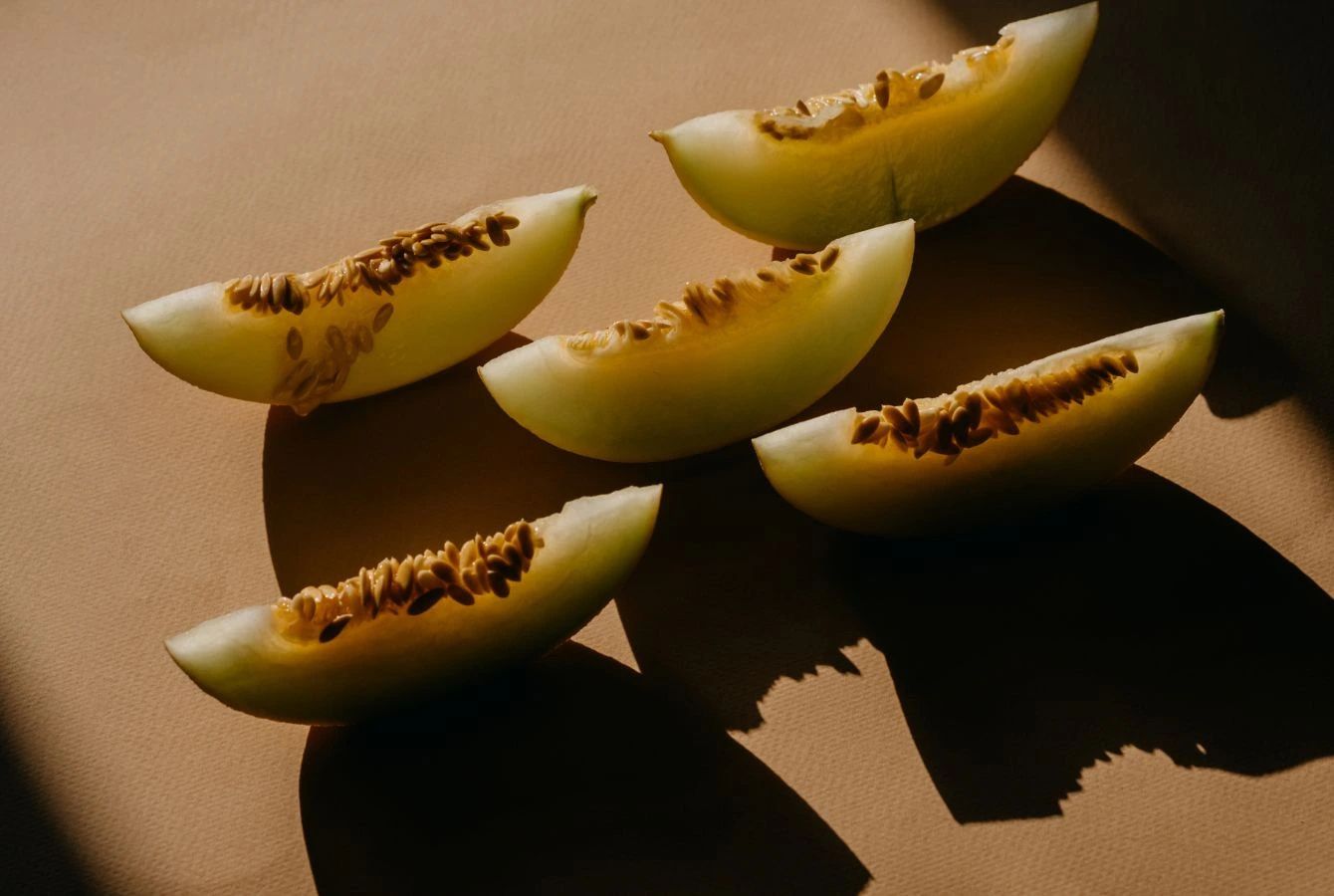
Its cultivation, deeply rooted in the agricultural tradition of our country, has led to unique and high-quality varieties. Want to learn more about how this delicious fruit reaches our tables?
Melon Planting: The First Steps
Melon planting is a delicate process that requires the right climatic conditions. In Spain, the warmest and sunniest regions, such as Murcia, Castilla-La Mancha, and Andalusia, are the most suitable for its cultivation.
Soil preparation: The soil must be well-fertilized and tilled to ensure proper plant development.
Sowing: Sowing usually takes place in late winter or early spring, once the risk of frost has passed. Seeds are sown directly in the ground or in seedbeds before transplanting the seedlings.
Irrigation: Melon plants require regular and abundant watering, especially during the growing and fruiting stages.
Growth and Flowering
Once planted, melon plants grow rapidly. Their large, fuzzy leaves protect the fruit from the sun and wind. During the spring, the plants bloom, and pollination occurs—an essential process for fruit formation.
Harvesting: The Perfect Moment
Harvesting melons is a crucial moment to ensure their quality. The optimal ripening point varies depending on the variety, but in general, a melon is considered ready for harvest when:
The skin develops a bright and intense color.
The stem separates easily from the fruit.
When tapped gently, it produces a dull, hollow sound.
Melons are harvested manually, with great care to avoid damaging the fruit.
Melon Season in Spain
The melon season in Spain coincides with the warmest months of the year, from late spring to early autumn. However, thanks to advancements in cultivation techniques and the diversity of varieties, we can enjoy melons almost year-round.
Spanish Melon Varieties
Spain is home to a wide range of melons, each with its own characteristics:
Piel de Sapo Melon: The most popular in Spain, featuring rough skin and sweet, aromatic flesh.
Yellow Melon: Recognizable by its bright yellow flesh and slightly tangy flavor.
Cantaloupe Melon: With a ridged skin and orange flesh, it is highly prized for its intense aroma.
Galia Melon: Small and round, with smooth skin and very sweet white flesh.
Melon in Spanish Gastronomy
Melon is a key ingredient in Spanish cuisine. It is enjoyed fresh as a fruit, in salads, gazpachos, and even in savory dishes like melon with ham. Additionally, it is used to make desserts, jams, and liqueurs.
Tips for Choosing a Good Melon
Weight: A ripe melon should feel heavy for its size.
Aroma: A good melon gives off a sweet and distinctive aroma.
Skin: The skin should be free of spots and damage.
Stem: The stem should be dry and slightly detached from the fruit.
Ultimately, melon is much more than just a fruit. It is a symbol of summer, a healthy and versatile food that is an essential part of our culinary culture. By understanding the cultivation process and different varieties, we can better appreciate its flavor and enjoy all its beneficial properties.

